


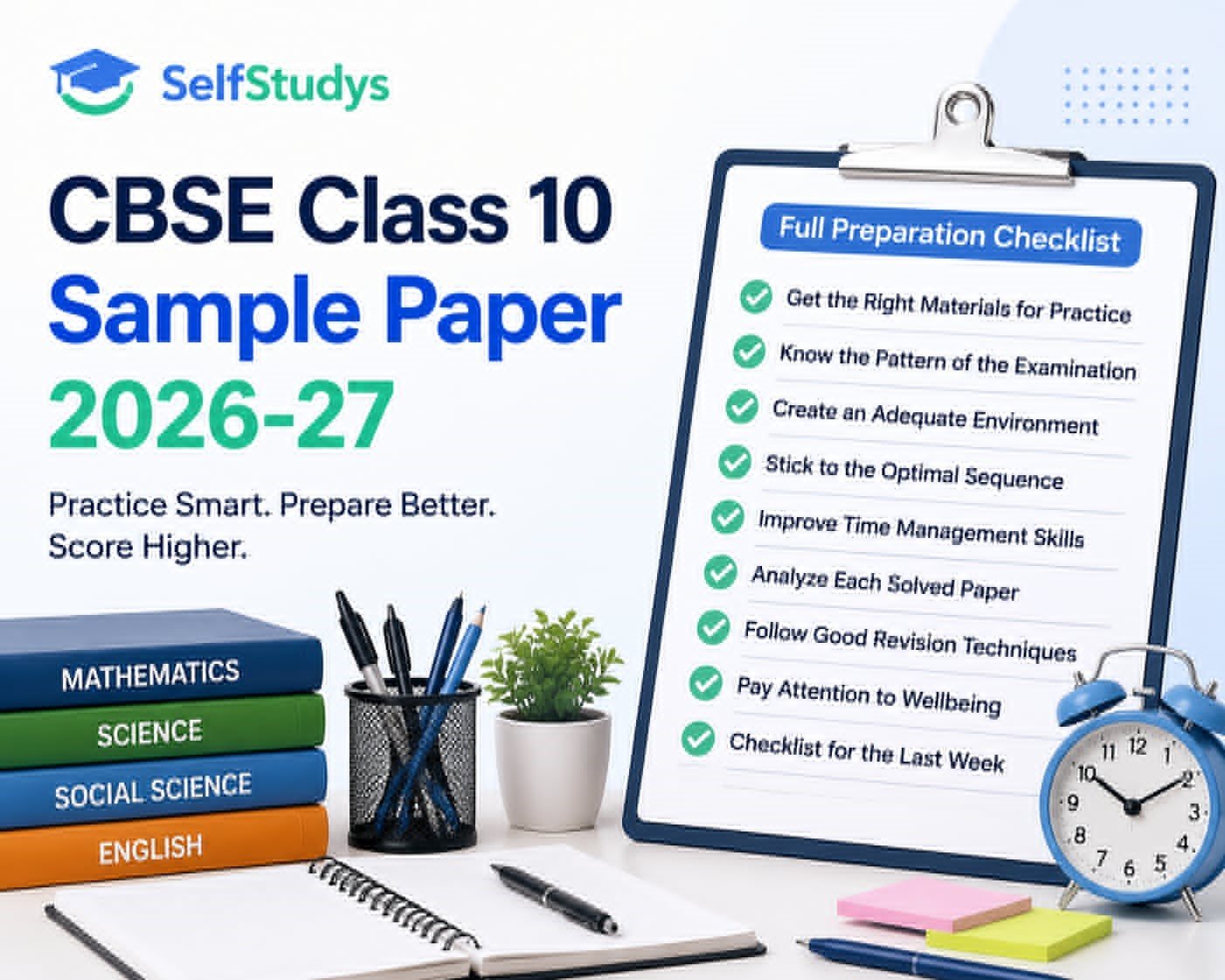
Preparing for the Class 10 board examinations can seem difficult considering the wide range of subjects, numerous chapters, and vast collections of previous papers. It is not about increasing efforts but having a certain order of things done right.
This checklist covers the whole process of preparation from getting the right materials to the last week before the examination. Doing everything in order will help to avoid missing any point.
Contents
– Get the Right Materials for Practice
– Know the Pattern of the Examination Beforehand
– Create an Adequate Environment for Practice
– Stick to the Optimal Sequence of Practice
– Improve Time Management Skills
– Analyze Each Solved Paper
– Follow Good Revision Techniques
– Pay Attention to Wellbeing
– Checklist for the Last Week
Get the Right Materials for Practice
The first step in preparing for an exam is getting the relevant and accurate papers. Practicing with the wrong materials trains you for the wrong test.
- Download the latest CBSE Class 10 Sample Paper 2026-27 for each subject.
- Make sure that each paper contains the solutions and the marking scheme.
- Use the official CBSE sample paper as your primary guide.
- Prepare NCERT books in parallel since the papers are based on them.
Know the Pattern of the Examination Beforehand
It is necessary to understand the assessment framework before doing any questions. The current Class 10 examination focuses on the students’ competencies and includes about half of the paper containing case- and application-based questions in addition to objective and descriptive ones.
- Learn the division of marks: 80 marks for theory and 20 for internal assessment for the main subjects.
- Understand that approximately 50% of the paper consists of competency- and case-based questions.
- Learn how the marks are distributed according to the marking scheme – keywords, steps, and points.
- Keep in mind that there are now two board examinations per year in Class 10.
Create an Adequate Environment for Practice
Just like the amount of practice is important, its quality is equally significant. Create the conditions for the exam right from the beginning.
- Do practice at your desk away from bed with your phone put aside.
- Use a three-hour timer for full papers.
- Write on ruled sheets to imitate the answer book of the exam.
- Approach practice with curiosity rather than fear, keeping the natural drive of learning that helps with revision and decreases stress.
Stick to the Optimal Sequence of Practice
The sequence of things you do is quite important. You need to gradually move to solving full papers, starting from simpler things.
- While you learn: do sample-paper questions topic by topic while completing each topic.
- After completing approximately 80% of the syllabus: start to solve full, timed papers.
- In the last weeks: add CBSE Previous Year Question Papers Class 10 to have real difficulty and repeated questions.
- Do practice with different subjects giving more attention to the weaker areas.
Improve Time Management Skills
Time mismanagement causes losing of marks. You need to improve your speed with every new practice.
- Use the first 15 minutes of the reading time to plan your sequence of attempts.
- Give yourself approximately one to one and a half minute per mark.
- Use a two-pass approach: do easier questions first, then move to the harder ones.
- Use skip-and-return technique to make sure that you don’t lose time on one question.
Analyze Each Solved Paper
This step is often missed but it is the main source of marks differences. The paper that is not analyzed does not give you much knowledge.
Compare your answers to the marking scheme objectively.
Tag your mistakes by types: concept mistakes, avoidable mistakes, incomplete answers, or time management problems.
- Keep track of mistakes in a continuous log and revise it regularly.
- Identify topics that repeatedly cause deductions in marks and revise them.
Follow Good Revision Techniques
Revision should focus on your weak points, not repeat the things you already know.
Start revision with your mistake log.
- Prioritize high-weight chapters and competency-based questions.
- Re-solve the questions you made mistakes in until you are able to do it easily.
- Check your weak topics with a new paper to make sure that the problem is solved.
Pay Attention to Wellbeing
Wellbeing is an inseparable part of preparation, not just something peripheral. Mental tiredness and stress decrease your performance.
- Sleep enough since sleep is necessary for memory consolidation.
- Take meaningful breaks between study sessions.
- Avoid negative comparisons with peers.
- If you feel too stressed due to exam, talk to a parent, a teacher, or counselor.
Checklist for the Last Week
The last week should polish your results, not bring in new materials.
- Solve one full timed paper every day or two days and then analyze it.
- Revise from your mistake log and essential formulas, not new chapters.
- Solve at least one or two previous year papers.
- Remain calm, get enough sleep, and rely on your previous practice.
Conclusion
A good result in Class 10 comes not from covering all the material simultaneously but from right actions done in the right order. This checklist gives you that: get the right materials, know the pattern, practice in the right sequence, manage time properly, analyze papers, revise intelligently, and care about your well-being.
By following this plan steadily until the exam, you will be ready for the test day with preparations, rehearsals, and confidence, having a list of all mastered topics.
FAQs
1. When should one start solving Class 10 sample papers?
Start with topic-wise practice after each topic is learned, then move to full timed papers after approximately 80% of the syllabus is covered.
2. How many sample papers should be solved?
Limited number of papers for each subject, analyzed thoroughly, plus several previous year papers in the end. The quality of analysis is more important than quantity.
3. Should answers be checked against the marking scheme?
Yes, this practice shows how to write complete marks earning answers and where the marks are lost.
4. Should previous year papers be used together with sample papers?
Yes, sample papers show the current pattern while previous year papers show the real difficulty and repeated questions.
5. How should exam stress be managed during preparation?
Stick to your regular schedule, get enough sleep, take breaks, and consult a parent, teacher, or counselor if you feel too stressed.