


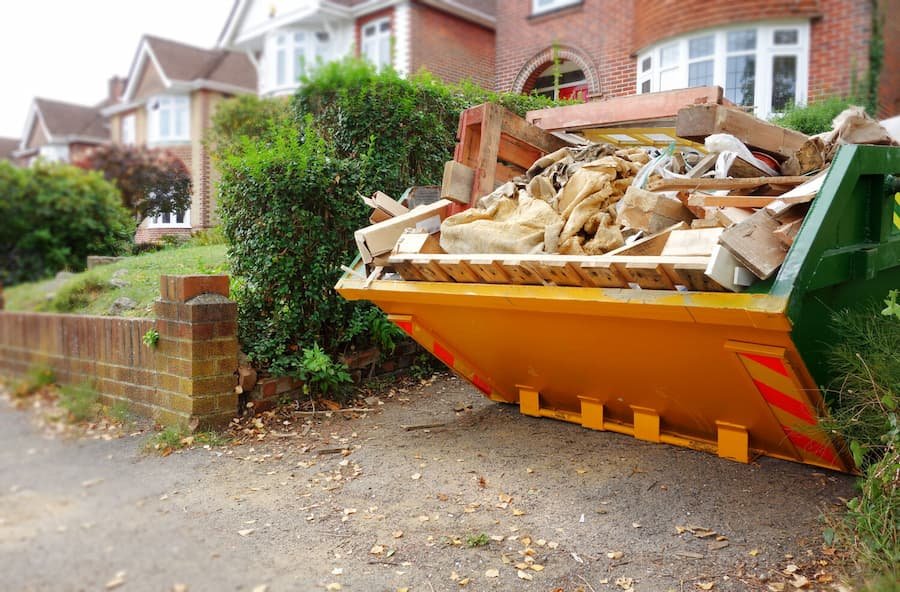
For effective planning and cost management, you need to know how much waste a large skip can hold before starting a major home renovation, building project, or large-scale cleanup. Maxi skips, sometimes called builder’s skips, come in a variety of sizes, each with a unique capacity and weight restriction. Choosing the right one ensures you have enough room for your waste without paying for capacity you don’t need. Overestimating wastes money, while underestimating might result in the expense and inconvenience of hiring another skip.
This guide explains how to choose the right skip size for your project, the factors that affect how much a large skip can contain, and its capacity. Dependable maxi skip hire services provide a selection of large containers for individuals needing significant garbage removal to meet any project’s demands.
Cubic Yardage and Skip Sizes: An Explanation
Skips are measured by their volume in cubic yards. We also offer larger roll-on, roll-off containers for large-scale industrial projects, though a large skip usually holds between 8 and 12 cubic yards. A builder’s skip, often known as an 8-yard skip, is a common option for medium- to large-sized projects. While a 12-yard skip is the biggest standard skip available for commercial and household use, a 10-yard skip provides more space for larger clearances. Understanding these sizes helps you choose the right skip for your project.
The 8-Yard Skip: What It Can Hold and What It’s Used For
A flexible choice that can accommodate around 60 to 80 black bin bags of trash is an 8-yard skip. It’s perfect for medium-sized building projects, complete house clearances, and extensive kitchen or bathroom makeovers. It’s usually approximately 12 feet long, 6 feet wide, and 4 feet high. While it offers a large capacity, keep in mind that heavy items like dirt, debris, and cement can quickly approach its weight limit. An 8-yard skip is ideal for mixed waste that includes bulky but light items.
The Extra Space: 10-Yard Skip
An 8-yard skip has less room than a 10-yard skip, which can hold around 80 to 100 garbage bags. It works well for substantial garden clearances, commercial fit-outs, and bigger home renovations. Its larger size makes it ideal for projects that produce a lot of bulky waste, including furniture, packaging, and wood. However, as with all skips, weight restrictions apply, and heavy materials must be handled with care. If you need more capacity but prefer not to rent several smaller skips, a 10-yard skip is a great option.
The Largest Standard Capacity: 12-Yard Skip
The 12-yard skip, which can accommodate 100 to 120 bin bags, is the largest conventional skip available for most residential and business projects. It’s well-suited for major home clearances, large construction projects, and large commercial waste removal. Typically, its measurements are about 14 feet long, 6 feet wide, and 5 feet high. Remember that a 12-yard skip loaded with heavy objects would likely exceed weight limits, despite its large volume. Smaller skips are often more suitable for heavy waste.
Why Weight Limits Are Important
Weight is just as important as volume in determining the amount of a skip’s carrying capacity. The maximum weight capacity of larger skips is often between 4 and 8 tonnes. Heavy items like rubble, concrete, soil, and bricks can quickly exceed these limits, even when the skip seems only partially filled. Additional fees, collection refusal, or safety risks may arise if you exceed the weight restriction. Let your skip rental company know what kind of rubbish you’ll be tossing out so they can recommend the right size and weight limit.
How Waste Type Influences Capacity
The amount of material a skip can carry is greatly impacted by the kind of trash. Without exceeding the weight restrictions, bulky, lightweight trash like furniture, packaging, and garden waste takes up a lot of space. Before the skip is full, heavy garbage like soil and rubble reaches its weight limits. In the middle of the range is combined trash. It’s frequently preferable to rent separate skips for heavy and light garbage, or to select a smaller skip for the heavy part, for projects involving a variety of materials. To prevent incurring unneeded costs, weight limits must be followed.
Conclusion
For effective project planning, knowing how much trash a huge skip can contain is crucial. Each size has a unique capacity and suits different projects, from 8-yard builders’ skips to 12-yard maxi skips and larger RORO containers. You must consider both volume and weight restrictions, since heavy items can reach weight limits before a skip is even full. Skip Hire services offer professional guidance and a selection of big containers for projects needing significant waste removal. To ensure a smooth, cost-effective waste disposal process, you can achieve this by matching the skip to your project.
Visit Mangabat for more informative blogs