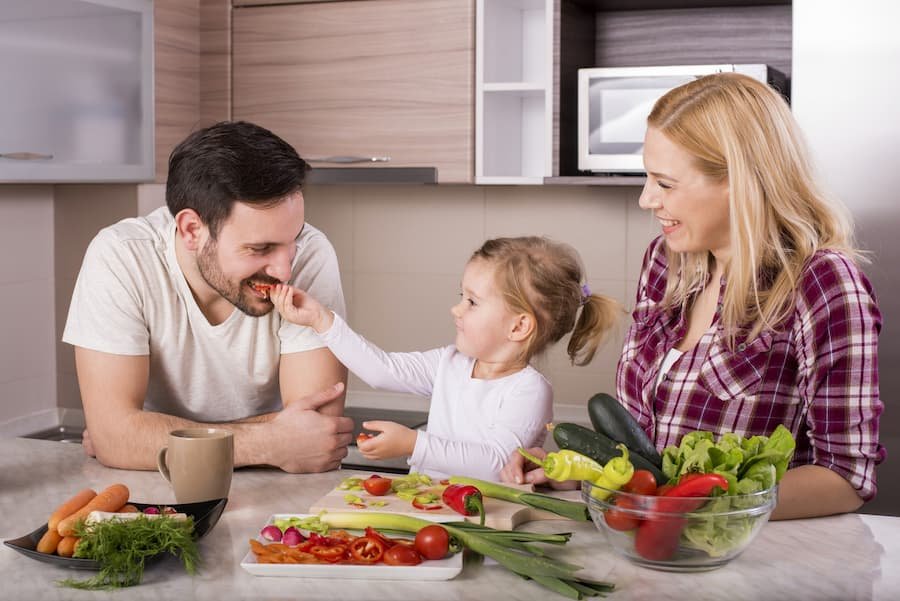
Healthy habits developed during infancy often persist throughout one’s life. Children’s physical health, mental well-being, and even academic achievement are all influenced by the routines they adopt for meals, sleep, exercise, cleanliness, and emotional control. Parents are the main developers of these habits, not by giving sermons, but by consistently setting a good example,
Sticking to routines, and building environments where making healthy choices is simple. Because they are more affected by what you do than what you say, small children learn by watching and copying others. Childcare environments serve a supporting role for working parents, reinforcing the same lessons. Day nursery Urmston is an example of a good provider that can supplement parental efforts by planning meals, encouraging active play, and providing nap times.
Put On Display The Actions You Want Others To See
Like sponges, children absorb their parents’ behaviour. Your child needs to observe you consuming vegetables with pleasure—not simply moving them around your dish if you want them to do the same. They must observe you choosing a stroll over the couch if you want them to be physically active. They must observe you taking deep breaths rather than shouting if you want them to manage frustration with ease.
Performance is not involved in modelling; it is genuine. When you make a slip (which you will), describe the mending process: Mother yelled because she was furious. I’m sorry. First, I’ll take a breath the next time. This shows accountability and progress. Your child’s mirror neurons are constantly observing you cannot delegate the development of habits.
Establish Daily Habits That Are Consistent
By establishing security and lowering decision fatigue, routines are beneficial. Kids may anticipate what will happen next when there is a consistent sequence of events: wake, breakfast, brush teeth, get dressed, go to nursery/school, eat lunch, have quiet time, play actively, eat supper, take a bath, read a story, and go to bed. Additionally, healthy habits are automated by routines.
It is a non-negotiable behaviour rather than a daily negotiation when brushing is always done before bed and after breakfast. It takes place after supper, when active play is arranged. Children cease asking outside that time frame when screen time is limited to 30 minutes every day. Routines are not inflexible jails; rather, they serve as a support system that fosters youngsters’ self-assurance to explore within secure parameters. Children who frequently test limits become anxious due to inconsistent routines.
Render Nutritious Cuisine Engaging and Convenient
Foods that children assist in preparing are more likely to be consumed by them. Engage them in age-appropriate kitchen chores: cleaning veggies, mixing batter, tearing lettuce for salad. Use amusing forms for food (apple fries, cucumber stars). Have a snackle box in the refrigerator, which is a transparent container with pre-cut vegetables, cheese cubes, and fruit parts set at child level.
Kids are more prone to eat and feel independent when they are able to help themselves. Refrain from utilising candies as prizes for completing vegetables, as this frames vegetables as a penalty. Instead, offer a first this, then that sequence devoid of emotional loading: First, we eat our broccoli, then we can have yoghurt. Effective, predictable, and impartial.
Regulate Screen Usage and Select Content Carefully
Active play, discussion, and sleep are being replaced by too much screen time. Children aged two to five should not spend more than an hour a day online, and children under two should not spend any time online, according to the UK Chief Medical Officers. Never place screens in bedrooms. When using a screen, co-view: watch together and talk about what you’re seeing. Why is that character unhappy? What do you believe will occur next?
This transforms passive eating into active learning. Use a visual timer, such as a colour-changing light or a sand timer, to indicate the remaining screen time. Reduce parent-child interaction by turning off background television, even when no one is watching. Tools, not babysitters, are screens. Substituting screen time with a real-world activity is the greatest practice.
Conclusion
Modelling, consistent routines, pleasant eating experiences, minimal screen time, everyday active play, protected sleep, emotional coaching, and playful hygiene are all necessary for teaching children healthy behaviours. Only one habit should be started at once. Introduce for two weeks before introducing another. You and your child should be treated with patience. The framework of a healthy life is built via small, constant activities done every day. You are raising an adult who will appreciate you, not simply a child.
Visit Mangabat for more informative blogs.